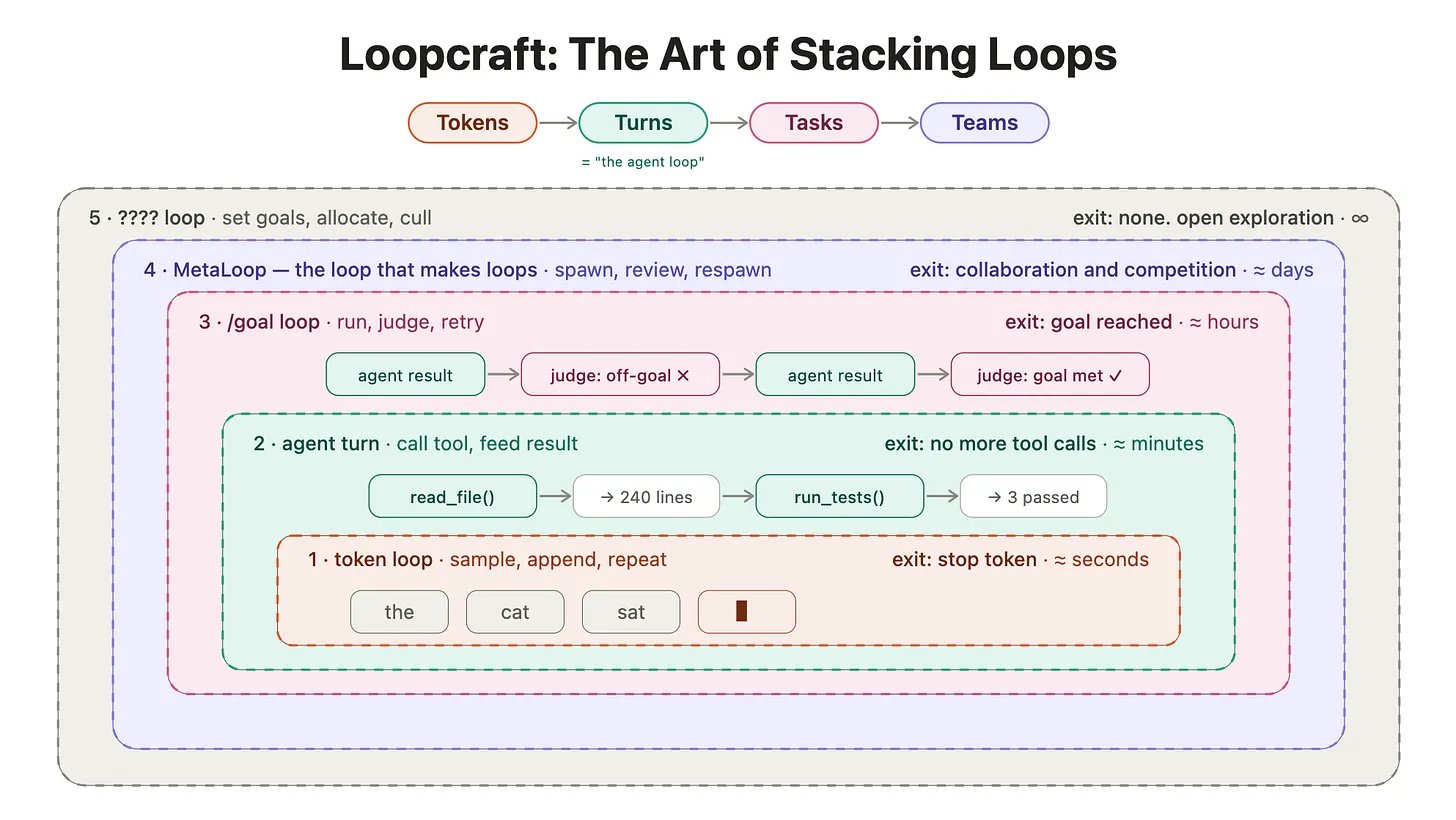
Last week Peter Steinberger posted this on X:
“Here's your monthly reminder that you shouldn't be prompting coding agents anymore. You should be designing loops that prompt your agents.” — @steipete, June 7, 2026
That same week, I caught myself thinking I was still trying to figure out harness-engineering.
The AI engineering race is spiralling out of hand.
The buzzword churn
We covered the buzzword chain in The AI Buzzword Cycle. The pattern has accelerated since:
- Agentic — 2024
- Scaffolding — late 2024
- Harness — early 2026
- Agent sandbox — Q2 2026
- Loop / LoopCraft — now
Each one was The Thing for a few months. Now the cycle is spinning faster than the learning curve.
Latent Space's LoopCraft writeup actually credits the loop framing to Steinberger, Anthropic's Boris Cherny, and Andrej Karpathy (recently joined Anthropic) — three senior and popular AI practitioners arriving at the same observation in the same month. That's usually how naming works: the concept was already obvious to people doing the frontier work; the term just hadn't landed. By the time it lands, it's already getting renamed.
What the labels are trying to capture
Underneath the labels, the actual skill is genuinely moving up. The progression is real:
- Typing got automated (a year ago).
- Prompting is now table-stakes — anyone can write a serviceable prompt (there are models that can write serviceable prompts too).
- Orchestrating multi-step agent systems is where the differentiation moved most in right now.
Whatever you call that orchestration layer — harness, loop, sandbox, scaffolding — the underlying skill is the same. Knowing what to verify. What to retry. What to escalate to a human. What to stop on entirely. And “most importantly” — cost-budgeting your loop so it doesn't run away.
Last week (June 10, 2026), Mark Ajzenstadt (@mardehaym) posted a now-viral screenshot: Cursor had charged him $1,400 in 90 minutes. He'd asked a PM agent to tag 87 ClickUp tasks, went into a meeting, and came back to find the agent had been looping the entire time — 1.3 billion tokens, $1,382.59, to tag tasks. Cursor's CEO Michael Truell (@mntruell) replied the same day with a full refund and a public note that they're adding spend controls “to automatically catch cases where an agent runs much longer than intended.”
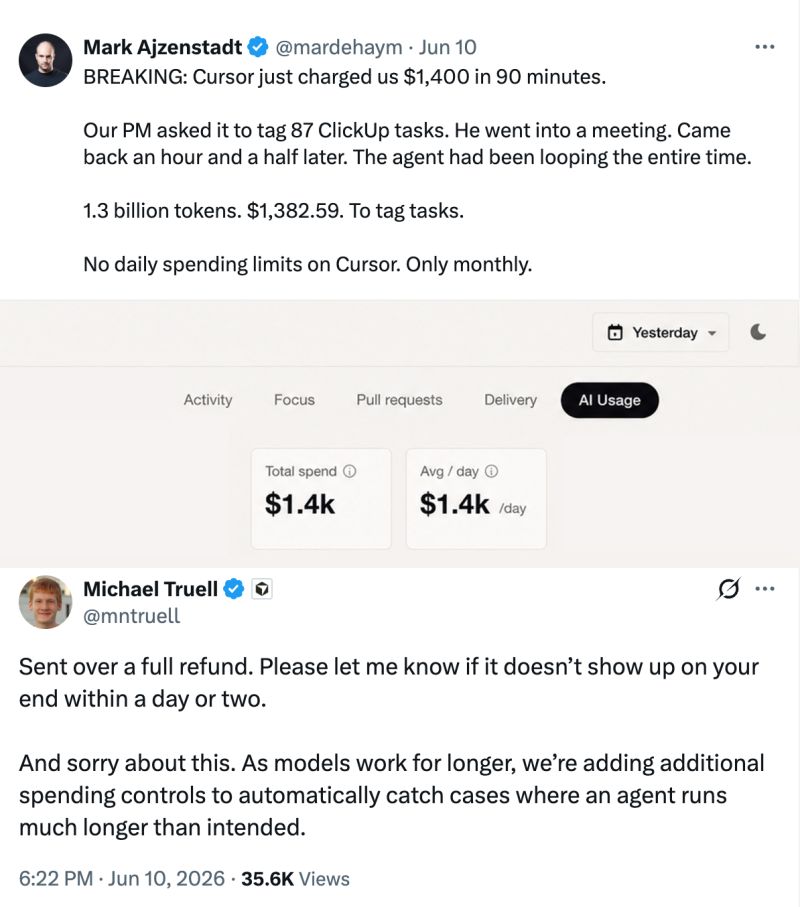
The loop ran. It just ran into a wall.
Pattern recognition is the real meta-skill
People who got value out of harness were the ones who already knew what they were doing under the prior name (scaffolding), and the name before that (agentic). The vocabulary shift is just a fresh wrapper around what experienced builders are already building on.
Same goes for loop. The builders who'll get value from it are those who were already designing multi-step verify-and-retry systems a few months ago and calling them something else.
This post you're reading will absolutely age in a quarter. Loop will be the new harness — which was the new scaffolding — which was the new agentic. The names will continuously evolve, but the skill is here to stay, and it will only get more valuable.
What you should actually focus on
Pay attention to who's chasing current buzzwords vs. who can still give you the same answer (workable pattern) when it's renamed next time. The first group is treadmilling. The second group has been doing the work the whole time.
If you've been designing loops (or however you call it) with verification, retries, and stop conditions for the last few months — congrats, you were doing whatever it's called now, and you'll be doing whatever it's called next quarter, too. If you're just hearing the term now, focus on the actual skill underneath — not the label that's already on its way out.
The race is real, and staying focused on the skill will help you win.