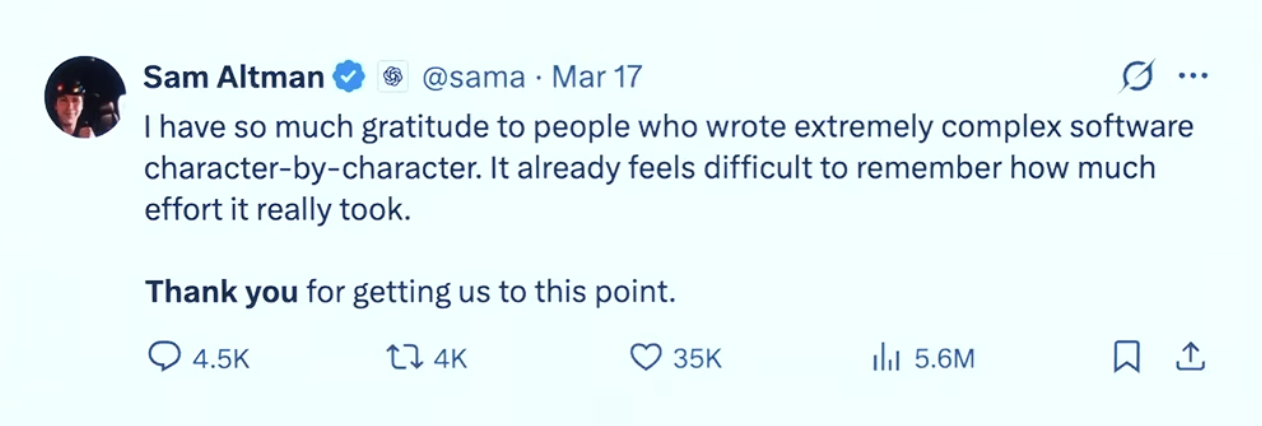
Vibe-coding is probably not the right framing for enterprises. Prompting an app into existence over a weekend may have a real thrill and a real capability — but that demo will still be a liability, not a system. No CIO is rebuilding the business on weekend hacks. And even if it works, it will have to go through the painful enterprise security, compliance, and QA checks and verifications before it can be put into production.
What is coming is quieter, and it is rather effective: AI deeply embedded in the enterprise software lifecycle. With intent, architecture, and review, it produces software that lasts — a very different claim from “anyone can build anything now.” The teams that win aren't the ones typing fastest; they're the ones whose AI-built software is still running, and still trusted, a year later.
And that quietly reopens a question the industry treated as settled. For twenty years the enterprise answer to “should we build this?” was “no — buy the SaaS” — the whole economy resting on one assumption: that custom software costs more than it's worth. That assumption is breaking, and the money has noticed.
The signal, not the noise
Chamath Palihapitiya — the founder of 8090 — raised a $135M Series A. His pitch is an “AI-native software factory” that helps large enterprises build from business intent to production code, with all the necessary enterprise grade features and workflows. Simply acknolwedging the need for change and his big bet: in the next two years, nearly every enterprise will replace or modernize all of the software that powers their business.
Ironically, Salesforce Ventures, the SaaS giant is funding the company whose entire premise is that enterprises will stop renting software and start building it. When the pendulum swings hard enough that the vendors start betting against their own business model, that's not a bubble or a trend cycle. That's a larger signal.
The data behind the vibe
It would be easy to write this off as one popular founder with a big funding round as experiment. But there have been steady data points and reports from various sources that indicate otherwise. Retool's 2026 Build vs Buy report found that 35% of teams have already replaced at least one SaaS tool with something they built themselves, and 78% expect to build more of their own tools in 2026. Klarna said it wound down Salesforce and Workday in favor of an AI-built internal stack.
The direction is not ambiguous. The cost of building fell far enough, fast enough, that a decision the entire industry treated as settled is being reopened at scale.
What actually changed
The reason to buy was never that buying was good. It was that building was bad — slow, costly, dependent on scarce skilled engineers. AI removed the premise, or atleast is reducing the dependency on few things. A coding agent (or agents) can scaffold a working version of what you need faster. Integrating an existing SaaS — SSO, permissions, the connector that breaks on every API change — now often takes longer than building a replacement.
This is the part everyone gets right: velocity is real, and it changed the math. When the build is cheap enough, “just build it” stops being reckless and starts being defensible. That's the AI-velocity half of the story, and it's the half that is getting all the attention.
The half the hype skips
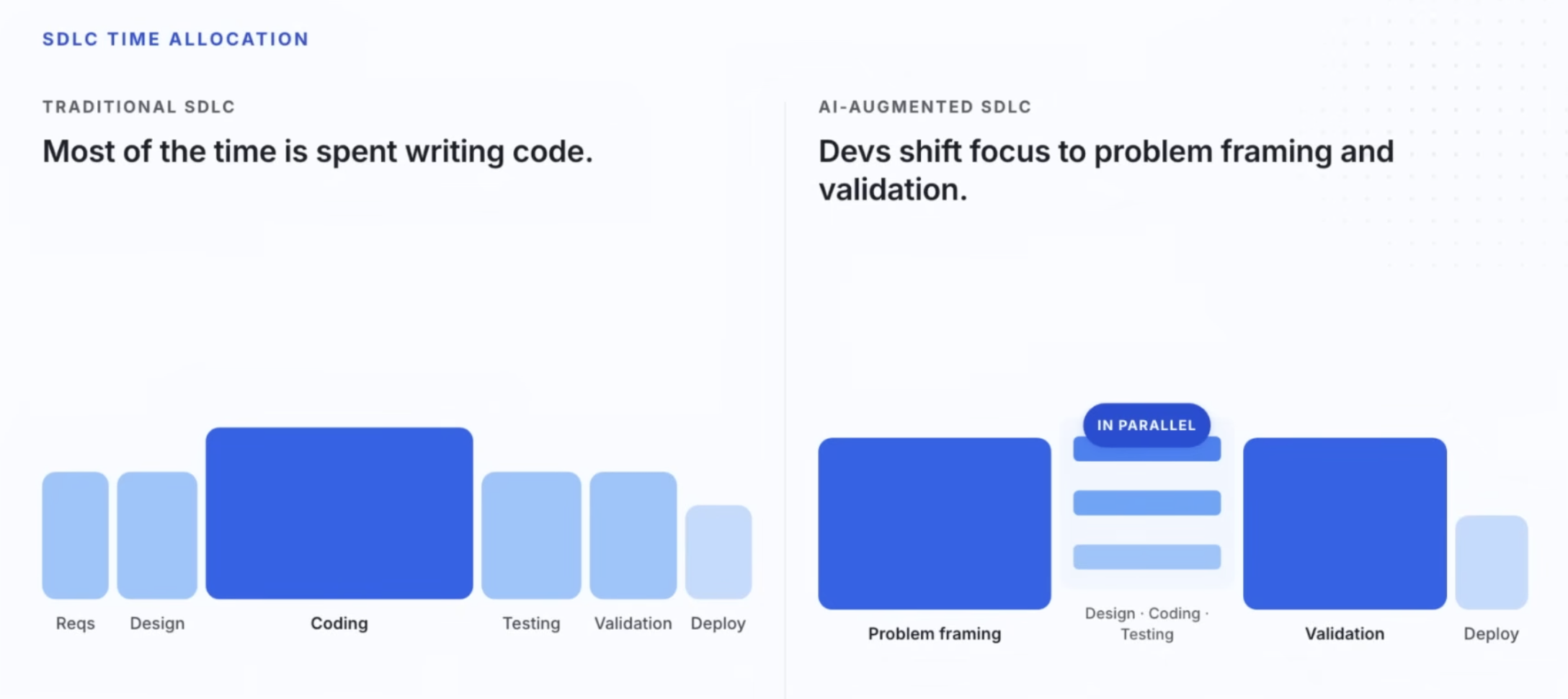
The AI velocity gets you a build. It does not get you a system. The weekend project that replaced a $50k SaaS subscription still needs someone to own the feature requests, the security patches, the midnight page, the compliance answer, and the migration when the person who built it leaves. AI made the first commit cheap. It did nothing to the recurring cost of keeping software alive.
So “custom is back” is true and dangerous in the same line. The teams that win the rebuild are not the ones who typed fastest. They're the ones who made the calls the model can't: the data model that won't paint you into a corner next month, the architecture that's cheap to run rather than merely cheap to write, the honest decision about what to not build. The comeback is not “AI writes all the software now.” It never was.
Human insight is the essential ingredient
Notice what 8090.ai is actually selling. Not “point the agent at your business and walk away.” The vision is to have “business leaders in the driver's seat” — with intent, control, audit trails, oversight at every step. A long bet on custom software is, underneath, a bet on keeping humans in the loop. Even the most aggressive version of this future is not autonomous. It is accelerated.
It's worth saying in plain terms. AI supplies velocity, which is now abundant and cheap. Humans still provide insight — domain knowledge, judgment, taste, the understanding of what the business actually needs — which is still scarce and still valuable. Custom software is coming back not because one of those got cheaper, but because the cheap one finally makes the expensive one worth expressing in code. For twenty years, most companies' specific insight about their own business never made it into software, because the translation cost too much. Now it can.
Velocity is the commodity. Insight is the moat. Anyone can generate the code; the value is in knowing which code is worth generating.
Custom software is coming back. Not because AI can build it alone — it can't, and the teams pretending otherwise will write the quiet loss post in eighteen months.
It's coming back because AI velocity finally made human insight cheap enough to ship. The code was never the hard part. Knowing what to build still is.